
The First Decision Shapes the Whole Game
The first meaningful decision in a game of Magic often happens before a spell is cast.
You look at seven cards, and within a few seconds you are asked to choose between two futures. In one, the game begins with the hand you have. In the other, you give up a card in exchange for another look at seven and a new set of possibilities.
That choice is so familiar that it is easy to treat it casually. Players say that a hand was “fine,” “sketchy,” “too slow,” or “too good to throw back.” After the game, the language becomes even less precise. “I got punished for keeping.” “I should have gone to six.” “I couldn’t mulligan again.”
Those reactions describe how the decision felt. They do not necessarily describe whether the decision was good.
Mulligan decisions deserve more attention because they sit at the intersection of almost everything else we do in competitive Magic. Deck construction determines which opening configurations are possible. Matchup knowledge determines which parts of those configurations matter. Sideboarding changes the range of relevant hands. Play and draw change the value of time. Testing tells us which starts actually produce the games we want to play.
Then all of that information has to become one decision.
Keep or mulligan.
The mistake is thinking that the purpose of the opening hand is simply to contain enough lands and enough spells.
A good opening hand is not a hand with lands and spells. It is a hand with a plan.
That idea is the foundation of this article. The goal is not to create a rigid checklist that tells you whether seven cards deserve a green light. Opening hands are too contextual for that, and good players should not outsource judgment to a procedure.
The goal is to understand what makes a hand functional, what makes it coherent, what makes it relevant to the game you are about to play, and why those qualities change from deck to deck and matchup to matchup.
The right mulligan decision is rarely about whether a hand looks acceptable in isolation.
It is about whether that hand is capable of doing the job the game is about to ask of it.
Mulligans Are About Hand Quality, Not Hand Pride
The London Mulligan gives players a fresh hand equal to their starting hand size each time they mulligan, then asks them to put a card on the bottom of their library for each mulligan taken once they decide to keep.
The practical consequence is important.
A mulligan is not only a loss of raw resources. It is also an opportunity to exchange one configuration for another and select the most useful cards from a fresh seven.
That means card quantity and hand quality cannot be treated as the same thing.
A mediocre seven is not automatically better than a strong six. A dysfunctional seven is very often worse than a six-card hand with a clear sequence and a credible route to winning. The emotional discomfort of starting with fewer cards is real, but it should not be confused with an argument for keeping.
One of the most common mulligan mistakes is refusing to separate two questions:
Can this hand technically play Magic?
And can this hand play the kind of game my deck needs to play?
They are not the same question.
Three lands and four castable spells can still produce a terrible opening hand. The mana may be wrong. The spells may all matter too late. The hand may interact on an axis that is irrelevant to the matchup. It may contain individually strong cards that do not work together. It may require several fortunate draw steps before it becomes competitive.
Conversely, a six-card hand can look modest and still be excellent because every card participates in the same plan.
This does not mean “mulligan aggressively” is good universal advice. Some decks are far better at absorbing the loss of a card than others. Some seven-card hands have enough card selection to justify speculation. Some matchups are so resource-intensive that throwing away a playable hand is extremely expensive.
The point is simpler: do not protect seven cards merely because they are seven cards.
The purpose of the mulligan is to improve your starting position.
What Makes an Opening Hand Good?
Players often evaluate opening hands card by card.
This land is good. That removal spell is good. This threat is one of the best cards in the deck. There are enough mana sources. Nothing is obviously embarrassing. Keep.
The problem is that an opening hand is not a collection of independent card evaluations. It is a system.
Its value comes from the relationships between the cards, the sequence they allow, the role they support, and the amount of work you are asking future draw steps to perform.
At a high level, strong opening hands tend to share three qualities: they function, they have a coherent plan, and that plan is relevant to the game being played.
Function
Function comes first.
Can the hand cast its spells on a useful timeline? Does it have the right colors rather than simply the right number of lands? Does the mana support the part of the curve that matters? Are the first turns real turns, or are you counting cards that will technically become castable after the game has already moved past them?
A three-land hand can be less functional than a two-land hand if those three lands do not let the deck execute. A hand full of cheap interaction can be nonfunctional against a strategy that does not care about that interaction. A control hand with powerful late-game cards may still fail the functional test if it cannot participate in the first turns of the matchup.
Function is the minimum requirement. It is not the conclusion.
Plan
The second question is what the hand actually does.
If you keep, what does the first meaningful sequence look like?
What are you trying to accomplish before the game becomes uncertain?
A tempo hand might deploy a cheap threat and protect the advantage long enough for that threat to matter. A combo hand might assemble access, acceleration, and protection. A midrange hand might develop mana while trading efficiently and establishing a source of pressure. A prison hand might convert fast mana into a constraining permanent before the opponent can operate normally.
The details change, but the principle does not.
A good hand should usually tell a coherent story about the game it wants to create.
That story does not have to end in a deterministic win. Magic is too interactive for that. It simply needs to be plausible. You should be able to explain why the cards belong together and what position they are trying to reach.
Relevance
Then comes relevance.
A functional hand with a coherent plan can still be wrong for the game in front of you.
A removal-heavy hand might be excellent against creatures and terrible against spell-based combo. A slow but resilient hand may be ideal in a resource battle and unacceptable in a matchup decided in the first two turns. A hand full of protection can be useless if it protects nothing. A hand with a devastating sideboard card can still be weak if the rest of the hand does not function.
This is where generic concepts like “good hand” begin to break down.
The same seven cards can be an easy keep in one matchup and an easy mulligan in another without either decision being inconsistent.
The Game Your Hand Is Asking You to Play
One of the most useful shifts in opening-hand evaluation is to stop asking whether a hand is keepable and instead ask what game the hand is asking you to play.
That framing forces you to think beyond card quality.
A hand with lands, removal, and card advantage may be asking you to play a long game.
A hand with a threat, cheap interaction, and a low land count may be asking you to protect a tempo advantage and end the game before the missing resources become a problem.
A hand with acceleration and several expensive cards may be asking you to accept vulnerability in exchange for speed.
A hand with cantrips but no payoff may be asking the top of your deck to provide one missing category of card.
Once you identify the game the hand wants, you can ask the more important question:
Is that a game my deck can realistically win here?
This is why archetype identity matters so much.
A linear combo deck does not necessarily want the most individually powerful cards. It wants access to the pieces and timing that make its engine work.
A tempo deck does not simply want threats and does not simply want disruption. Its best hands often derive strength from the relationship between the two.
A control deck can afford to value future card quality more heavily than an aggressive deck, but only if the opening hand contains enough early structure to reach that future.
An engine deck may judge almost every card in the hand through the lens of one enabling permanent.
Vintage Dredge makes the point almost absurdly clear. In a deck built around Bazaar of Baghdad, conventional ideas about balanced mana, curve, and raw card quality are secondary to whether the hand accesses the engine that makes the entire deck operate. Serum Powder belongs to that same logic: the value of the hand is not being measured by ordinary standards because the deck itself is not operating by ordinary standards.
This is why universal mulligan rules fail.
The deck defines what function means.
The matchup defines what relevance means.
The hand tells you whether those two ideas have actually come together.
The Draw Step Is Not a Plan
Many bad keeps begin with a sentence that sounds harmless:
“I just need to draw…”
Sometimes that is completely reasonable.
A two-land hand that functions with any third land in a deck with a high density of mana sources may be a good keep. A cantrip-heavy hand that needs one threat can be defensible if the deck has many threats and several ways to look at extra cards. A one-land hand on the draw may be acceptable when the deck contains enough cheap card selection and the single land casts it.
The problem starts when one missing piece quietly becomes several.
The hand needs a land.
But not just any land: a specific color.
And it needs an early interaction spell.
And after that, it still needs a threat.
Now the hand is no longer one draw away from functioning. It is asking the deck to repair multiple independent structural problems in sequence.
That distinction is more important than the simple label “risky.”
There is a major difference between a hand that needs one common event to happen and a hand that needs several unrelated things to happen before it becomes competitive.
The first may be a calculated keep.
The second is often wishful thinking disguised as optimism.
This is where understanding your deck quantitatively becomes useful, but numbers should support judgment rather than replace it. Knowing how many untapped colored sources you play, how many early threats remain, how many cards turn on an engine, or how many draw steps you are likely to see before a critical turn gives you a more honest picture of the hand.
Eternal MTG’s Mana Base Calculator and Deck Analyzer fit naturally into this process. Their purpose is not to produce a KEEP or MULLIGAN button. The useful information is structural: how many sources actually cast the spell you care about, how many live draws repair the hand, where the curve is concentrated, and how much redundancy exists around the plan you are trying to execute.
The more you understand those numbers away from the table, the less likely you are to invent them emotionally when the opening seven appears.
A useful mental distinction is between hands that are self-contained, hands that need one broad category of draw, and hands that need the deck to solve several unrelated problems.
You do not need to label them that way during a match.
You just need to recognize the difference.
Context Changes the Answer
There is no such thing as a good opening hand in a vacuum.
There are good opening hands for a deck, against an opponent, from a particular seat, with a particular sideboard configuration, at a particular hand size.
Game 1 against an unknown opponent is the cleanest example.
When you do not know what the opponent is playing, broad functionality carries more value. You cannot optimize for an axis you have not seen. Unless your own strategy is extremely linear, hands that combine a proactive plan with flexible interaction tend to age better than hands that make one narrow assumption about the opponent.
After the matchup is revealed, the evaluation can change dramatically.
Now you know which turns matter.
You know which resources are contested.
You know whether time favors you.
You know whether your interaction actually interacts.
You know whether the game is likely to be about speed, attrition, mana, a permanent type, the graveyard, the stack, or something else entirely.
This is where the rest of tournament preparation finally reaches the opening hand.
The Metagame pages can tell you what you are likely to face. Matchups can show where structural advantages and weaknesses appear. Deck Guides can explain card roles, sideboard plans, and the texture of important games.
The mulligan is where that information becomes a decision.
If preparation tells you that a matchup is decided by stopping one early engine, then a hand that cannot participate on that axis deserves more scrutiny. If the matchup is a long resource battle, a seven-card hand with broad card quality may be preferable to an explosive six that runs out of material quickly. If the opponent cannot beat a certain type of start, the value of finding that start increases.
Play and draw
Play and draw add another layer.
The difference is not merely an additional card.
Time itself changes value.
A slower hand may be acceptable on the play because it establishes the first relevant permanent before the opponent can act. The same hand may be too slow on the draw. In another matchup, the additional card and draw step can make a speculative mana hand safer. Reactive cards can rise or fall in value depending on whether you are ahead or behind in development.
Pre-board and post-board
Then sideboarding changes the deck.
You have removed cards that were weak. You have added narrower, more powerful tools. The opponent has done the same. Some Game 1 keeps become unacceptable because the post-board games revolve around a more specific fight.
But this creates another trap.
Boarding in a powerful card does not mean you should automatically mulligan until you find it.
Sideboard cards are part of a plan. They are not the plan by themselves.
The right question is not “Do I have my hate card?”
It is “Does this hand have a credible way to play the post-board game?”
Sometimes the answer really does depend on one card. There are matchups where a narrow effect changes the entire game and hands without access to it are substantially weaker.
But even there, the cost of another mulligan matters.
The decision is always comparative.
You are not choosing between this hand and the perfect hand.
You are choosing between this hand and the realistic distribution of hands you might see next, at one fewer card.
Seven, Six, and Five Are Different Worlds
The quality threshold for a seven-card hand should not be identical to the threshold for a five-card hand.
That sounds obvious, but players violate it constantly.
At seven, you can demand a great deal. You are allowed to reject hands that merely function if your deck is capable of finding hands that function much better.
At six, the cost of another mulligan becomes more meaningful, but six is still enough cards to build a coherent opening. The London Mulligan also gives you selection: a strong six can be extremely focused because the weakest card from the new seven goes to the bottom.
At five, priorities often compress. You may no longer be looking for elegance. You are looking for a hand with a realistic path to doing something powerful or relevant before the resource deficit becomes decisive.
The mistake is letting hand size replace judgment.
“I can’t go to five” is not analysis.
Sometimes you absolutely should keep an imperfect six because the expected five is worse. Sometimes the six has no credible plan and going to five is the only way to preserve meaningful winning chances.
Similarly, a five-card hand does not need to look like a good seven with two cards missing. The deck may need to lean harder into its strongest structural feature: a powerful engine, a disruptive start, an efficient threat, or a sequence that compresses the game enough to make raw card count less important.
As your hand gets smaller, the question changes from “Is this ideal?” to “Is this viable?”
But viable still has to mean something.
Fewer cards do not turn a nonfunctional hand into a functional one.
They simply raise the price of asking again.
Different Decks, Different Mulligan Logic
One of the most dangerous habits in competitive Magic is carrying the mulligan instincts from one archetype into another.
The same player can be excellent at evaluating opening hands with a deck they know deeply and surprisingly poor when they switch strategies.
That happens because mulliganing is partly a form of deck mastery.
Linear decks often reward hands that establish their engine quickly and punish balanced hands that never assemble enough of the core plan.
Tempo decks tend to care about the relationship between pressure and interaction. Too much of either side can create hands that look full of good cards but fail to exploit the tempo structure of the deck.
Midrange decks are usually more tolerant of balanced, flexible hands, but even there matchup context matters. A pile of efficient one-for-ones may be perfect in one pairing and badly underpowered in another.
Control decks often care less about opening explosiveness and more about mana stability, early survival, and the ability to turn the corner later. But “my cards are good if the game goes long” is not a reason to keep a hand that cannot reach the long game.
Prison decks care about timing in a different way. A lock piece that arrives after the opponent has already deployed their critical resources may barely function as a lock at all.
Engine decks can be the most extreme. When one card changes the value of everything around it, the deck’s mulligan strategy may be built around finding access to that engine rather than preserving conventional card advantage.
Vintage Dredge is a useful reminder because its structure makes visible what is true in subtler forms elsewhere.
You are never mulliganing “a Magic hand” in the abstract.
You are mulliganing a hand for this deck.
Don't Mulligan for Cards. Mulligan for Game Plans.
This distinction becomes especially important after sideboarding.
Suppose you are playing against a graveyard deck and have brought in a powerful hate card.
It is tempting to reduce the post-board mulligan decision to one question:
Do I have the hate?
That may be the wrong level of analysis.
What problem is the hate card solving? How early does the solution need to exist? Can the rest of your hand pressure the opponent while the hate buys time? Can the opponent answer the hate easily? Do you have other forms of interaction that accomplish a similar job? What happens if the hate card is removed?
Those questions turn a card into a plan.
The same logic applies across formats.
Against combo, “I need Force of Will” is weaker thinking than “I need to interact before their critical turn and still have a route to converting that interaction into a win.”
Against Shops, “I need artifact removal” is weaker than “I need a hand that can continue operating through an early mana-tax effect and answer the permanent that will otherwise lock me out.”
Against a fast creature deck, “I need removal” is weaker than “I need to stop the first burst of pressure without keeping a hand that has no way to stabilize or race afterward.”
This is one of the places where good mulliganing becomes indistinguishable from good matchup knowledge.
Cards are tools.
The hand needs a job.
Six Hands, Six Different Questions
Theory becomes useful when it survives contact with real opening hands.
The following examples are deliberately different from one another. They are not intended to create universal keep rules for the named archetypes. Exact lists change, sideboard configurations change, and individual pilots may reasonably disagree at the margins.
What matters is the reasoning.
Each hand is asking a different question.
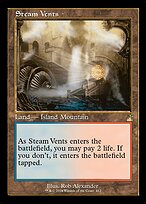
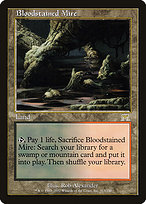
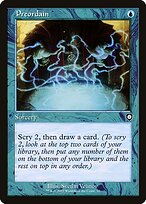
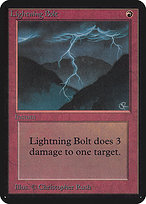
Izzet Prowess: One Missing Piece, Many Ways to Find It
Amulet Titan: Powerful Cards Are Not the Same as a Functional Hand
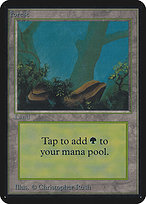
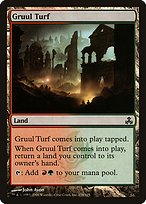
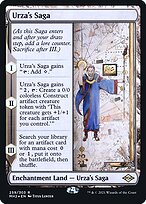
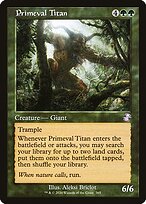
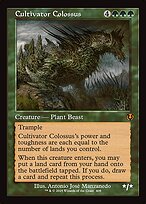
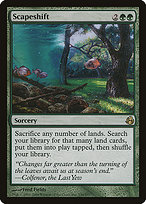
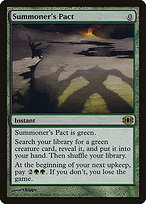
Almost every nonland card in this hand represents serious power.
That is not enough.
The hand has mana in the literal sense, but it lacks the acceleration or engine pieces that allow Amulet Titan to convert lands into a meaningful early game. There is no Amulet of Vigor. There is no Arboreal Grazer. There is no early effect that compresses the timeline.
The result is a hand full of destinations without a vehicle.
It is tempting to keep because the cards are individually strong and because Urza's Saga can eventually help assemble value. But “eventually” is doing too much work. Against an unknown Modern opponent, the cost of spending early turns developing slowly can be enormous.
More importantly, the deck is capable of much more coherent six-card hands.
This is a good example of why card power can mislead mulligan decisions. A hand does not become functional by containing several of the cards you most want to cast later.
The question is whether it can reach the part of the game where those cards matter on a competitive timeline.
This one is asking the top of the deck to provide acceleration immediately, and if it does not, the hand is likely to spend its first turns proving how powerful its uncastable cards are.
Dimir Reanimator: The Hand Already Knows What It Is Doing
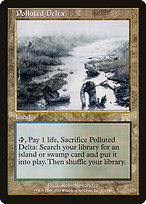
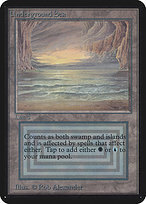
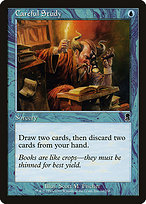
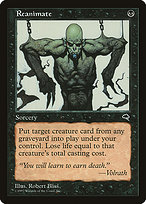

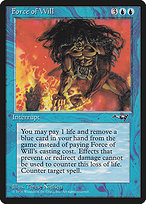
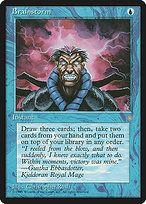
This hand is strong not because every card is powerful, but because almost every card participates in the same early plan.
The mana works. Careful Study can place Atraxa into the graveyard. Reanimate converts that setup into a threat. Force of Will protects the critical exchange or prevents an opposing fast start. Brainstorm adds flexibility and helps repair the hand if the opponent’s interaction forces the game away from the cleanest line.
The key feature is self-containment.
The hand is not waiting for the deck to give it an identity. It already has one.
That does not mean you blindly execute the fastest possible sequence into any opponent. Unknown information still matters. The opponent’s first land, first spell, and available interaction can change the best line. Brainstorm may become more valuable as protection than as velocity. Force may need to stop the opponent rather than protect your own plan.
But those are sequencing questions.
The mulligan question is much easier.
The hand functions, has a clear proactive plan, and retains interaction without requiring multiple draw steps to become relevant.
Blue Tempo: The Matchup Can Make a Strange Hand Good
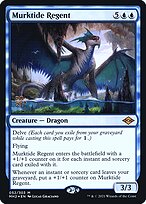
Against an unknown opponent, you might worry about the hand’s pressure being delayed. Murktide Regent is not an immediate threat, and the hand is not presenting the classic turn-one creature plus disruption start that many tempo decks prefer.
But the matchup changes the assignment.
You are not primarily trying to maximize early damage. You are trying to survive the opponent’s critical window without becoming so reactive that you never establish a clock.
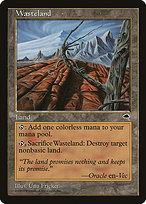
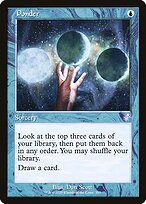
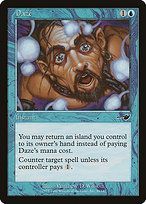
This hand has Force of Will and Daze, two cantrips to improve card quality and find additional pressure or interaction, enough mana to operate, and a threat that becomes increasingly realistic as the graveyard fills.
The hand is slower than an ideal tempo hand.
It is also highly relevant to the game being played.
That distinction is crucial.
A matchup can make a hand better without changing a single card because it changes what “good” means.
If the opponent were a slow control deck, the same seven might deserve a much harsher look. Daze could lose value, Wasteland might or might not be important, and the lack of immediate pressure could become the central flaw.
Opening-hand quality is contextual, not intrinsic.
Sphere Shops: The Hand Is More Than Its Lock Piece

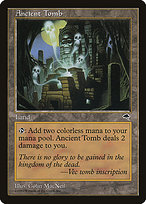
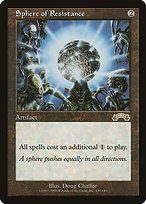

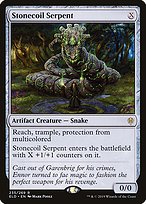
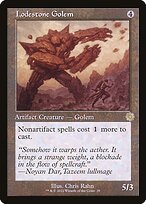
This is the kind of hand that demonstrates why archetype-specific mulligan knowledge matters.
The obvious attraction is Sphere of Resistance backed by fast mana.
But the hand is not good merely because it contains a disruptive permanent.
It is good because the disruption is connected to pressure and follow-up.
Mishra's Workshop and Ancient Tomb allow the deck to deploy expensive artifacts ahead of schedule. Sphere of Resistance can force the opponent to operate inefficiently. Patchwork Automaton and Stonecoil Serpent provide ways to turn that delay into a clock. Lodestone Golem extends the same pressure-and-tax structure. Wasteland gives the hand another way to exploit a mana advantage.
The cards reinforce one another.
Now imagine replacing both threats with expensive lock pieces that do essentially the same job. The opening might look more “powerful” because it contains more disruption, but it could become worse at converting that disruption into a win.
Prison hands are particularly vulnerable to this mistake.
A lock is not a victory condition.
The best openings usually constrain the opponent and then make the cost of that constraint matter.
Dredge: When the Deck Is Built to Reject Normal Hands
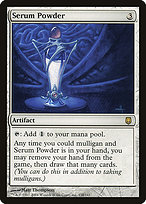
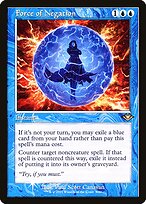
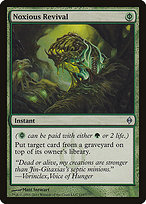
This is the most extreme example in the article, and that is precisely why Serum Powder is such an appropriate image for a discussion of mulligans.
By conventional standards, the hand contains real spells, interaction, and engine pieces.
By the standards of the deck, it is missing the card that makes those resources function together: Bazaar of Baghdad.
Bazaar-based Dredge can devote four slots to Serum Powder for exactly this reason. The card gives the deck another way to reject an opening hand without immediately accepting the normal card-count cost of another mulligan, increasing its access to the engine it values above almost everything else.
The important lesson is not that every deck should mulligan until it finds its best card.
Dredge is an intentionally extreme example.
The lesson is that a deck’s structure determines what an opening hand is worth.
If the value of almost every other card in the deck changes dramatically depending on whether one engine is present, then conventional standards such as “this hand has enough spells” become almost meaningless.
Serum Powder makes that truth visible.
Other decks express the same principle more subtly.
Preparation Should Improve Mulligan Decisions
Mulliganing is usually treated as an in-game skill.
A large part of it is actually preparation.
You can improve through repetition, but simply playing more games does not guarantee that your opening-hand decisions will get better. You need to notice which hands are producing the games you want and which hands repeatedly fail for structural reasons.
This fits directly into the broader Eternal MTG preparation philosophy.
Testing should reduce uncertainty.
One of the uncertainties worth reducing is what your opening hands are supposed to accomplish.
During a testing session, do not only record who won. Pay attention to the hands that generated discussion before the game even started.
Which seven looked strong but consistently failed to establish the right role?
Which one-land hands actually had enough redundancy to work?
Which six-card hands performed better than expected because every card mattered?
Which post-board hands contained the sideboard card you wanted but still lacked a viable game plan?
Which hands changed value dramatically between play and draw?
Those observations are more useful than memorizing individual seven-card combinations because they create heuristics that survive new draw sequences.
You begin to recognize classes of hands.
You learn that a particular matchup rewards early pressure more than card advantage.
You learn that a certain two-land configuration is functionally closer to a one-land hand because one color is missing.
You learn that one cantrip is enough to justify a speculative keep, while another class of hand is asking too much from the top of the deck.
You learn that after sideboarding, the games are slower than you expected and you can keep more resource-heavy hands.
Or you learn the opposite.
This is why discussing mulligans during testing is valuable. If a hand is genuinely close, pause and talk about it before playing. State what you think the hand is trying to do. State what you think it needs. Then play the game.
The result will not prove that the keep was correct or incorrect.
But the game can reveal whether your model of the hand was accurate.
That is what you are really testing.
Turning Mulligan Decisions Into Useful Data
There is a danger in tracking mulligan decisions too aggressively.
It is easy to create a spreadsheet, record whether you kept six or seven cards, attach a win or loss, and begin telling yourself a story from a tiny sample.
That is rarely useful.
If you kept seven ten times and won six games, that does not mean your seven-card keeps are 60% decisions. If you went to six four times and lost three of those games, that does not prove you should mulligan less.
Outcome data does not isolate decision quality.
The hand itself mattered. The matchup mattered. The player on the play mattered. The draw steps mattered. The opponent’s hand mattered. The reason you mulliganed mattered.
If you want to track opening hands during testing, the most useful information is usually qualitative first.
What was the matchup?
Were you on the play or draw?
How many cards did you keep?
Why did you keep the hand?
What plan was the hand supposed to execute?
Did it actually execute that plan?
The last question is more informative than whether you won.
A perfectly judged keep can lose to a stronger draw.
A terrible keep can win after three ideal topdecks.
Do not judge a mulligan decision by the result of the game. Judge it by the information available when the decision was made.
If you allow the final result to rewrite the quality of the original decision, you will train yourself badly.
This is the same principle we use elsewhere in competitive preparation: separate result from process whenever possible.
Eternal MTG’s Testing Sessions can make this kind of reflection easier because the point of recording a session should not be to manufacture personal matchup percentages. It should be to preserve the decisions and patterns that actually improve future play.
Mulligan notes fit naturally into that system.
Not every hand deserves documentation.
The difficult ones do.
Good Mulliganing Is Disciplined, Not Mechanical
There is a risk in turning mulligan theory into a framework.
If the framework becomes useful, it is tempting to convert it into a checklist.
Does the hand have mana?
Yes.
Does it have a plan?
Yes.
Does it have interaction?
Yes.
Keep.
That is not what this article is arguing for.
Good mulliganing is not mechanical because the value of each question changes with context.
Sometimes mana stability is the dominant concern.
Sometimes it barely matters because the game will be decided before a third land drop.
Sometimes interaction is essential.
Sometimes drawing interaction instead of another threat is exactly how your deck loses.
Sometimes a speculative hand is acceptable because the deck contains enormous redundancy.
Sometimes a hand that needs only one card is still a bad keep because the window for drawing that card is too small.
The purpose of a framework is not to remove judgment.
It is to make judgment more precise.
Instead of saying, “This hand feels fine,” you begin to see why it feels fine.
Instead of saying, “I got punished,” you can distinguish between a reasonable keep that did not work and a keep that was structurally unsound from the beginning.
Instead of saying, “I can’t go to five,” you can compare the game this six is likely to produce with the range of games a five might produce.
And instead of chasing the strongest individual card in a matchup, you can ask whether the entire hand is built to play the right game.
That is discipline.
The psychological side of mulliganing is not about becoming fearless.
It is about becoming less attached to the wrong things.
Seven cards are not inherently safe.
A powerful card is not inherently a plan.
A land count is not inherently functional mana.
A sideboard card is not inherently a good post-board hand.
A win is not inherently evidence that the keep was right.
The better your model of the deck and matchup becomes, the less you need those shortcuts.
Mulligan Toward a Plan
There is no perfect universal mulligan rule because there is no universal opening hand.
There are decks with different engines, matchups with different pressures, games with different timelines, and players with different levels of mastery.
The goal is not to mulligan more.
It is not to mulligan less.
It is to mulligan with a reason.
A strong opening hand combines enough function to participate in the game, enough coherence to pursue a real plan, and enough relevance for that plan to matter in context.
Sometimes that means keeping seven balanced cards.
Sometimes it means sending back a hand full of powerful spells.
Sometimes it means accepting six because the hand does exactly what the matchup requires.
Sometimes it means going to five because the six never had a realistic path to winning.
And in the most extreme cases, it means building your deck with Serum Powder because finding the engine matters more than preserving a conventional opening hand.
This is where mulliganing connects to the rest of the Eternal Staples philosophy.
Choosing a Deck asks what strategy you should bring to the tournament.
Preparing Better, Preparing Smarter asks what you need to understand before Round 1.
Mulliganing asks whether you can recognize that understanding when the first seven cards are finally in front of you.
The first decision of the game should not be a ritual.
It should be the first expression of your preparation.
Do not ask only whether the hand is keepable.
Ask what game the hand is asking you to play — and whether that is a game you are prepared to win.
At first glance, this hand seems to violate one of the most obvious rules of a Prowess deck: there is no creature.
That is exactly why it is useful.
A simplistic evaluation says that the hand has no threat and should go back. A more careful evaluation asks what the hand actually needs and how difficult that thing is to find.
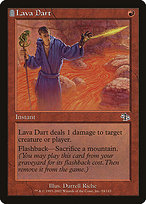
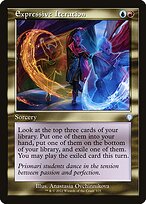
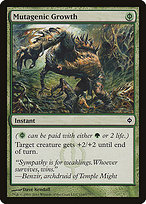
The mana works. Preordain can be cast immediately. The deck contains a meaningful density of creatures, and the hand contains multiple spells that become excellent once one of those creatures appears. Expressive Iteration gives the hand another layer of selection and card flow if the game reaches that point. Lightning Bolt and Lava Dart can also prevent the opponent from running away with the game while you search.
This hand has one structural hole: pressure.
It does not have several unrelated holes.
That is the difference.
Keeping does not guarantee that the first Preordain finds a threat. It simply means the hand is asking for one broad category of draw from a deck built to provide it, while already possessing mana, selection, and interaction.
If the same seven contained no Preordain and an additional pump spell instead, the decision would become much less attractive. The cards would look more explosive, but the hand would be doing less to solve its own problem.